South Africa does not ask you to choose between a golf holiday and a safari. On a single trip, you can spend a few days in Cape Town, head into the Winelands for long lunches and vineyard views, follow the coast along the Garden Route, and finish with nights in the bush where the golf clubs suddenly feel much less important. Or you can reverse the route entirely and start with wildlife before heading south.
*This is a collaborative post
That flexibility is particularly useful when you are travelling with people who do not all want the same thing from a holiday. South Africa has enough golf to anchor a serious trip, but enough outside the fairways to make that unnecessary. The key is choosing a route rather than trying to cover the whole country at once.
Table of Contents
Start by Choosing Your Region
South Africa is vast, so the first decision is not which hotel to book or which course to play. It is which part of the country you want to experience.
For a first trip, the combination of Cape Town, the Winelands, the Garden Route and a Kruger safari covers an enormous range without requiring you to stitch the entire country together by road. You get a city, coast, mountains, wine country and wildlife within a single logical route.
Golf fits naturally into this at several points. There are incredible courses around Cape Town and the Winelands, while the Garden Route adds more, including Fancourt near George. Further north, around Kruger National Park, the experience changes completely, with Leopard Creek offering something much closer to a golf and safari holiday in South Africa than a conventional resort round. Premier Golf put together tailored golf trips to South Africa that combine courses in Cape Town and the Garden Route with safari stays, which is worth looking at early in the planning process.
Give Cape Town Enough Time
Cape Town deserves more than a quick arrival and departure.
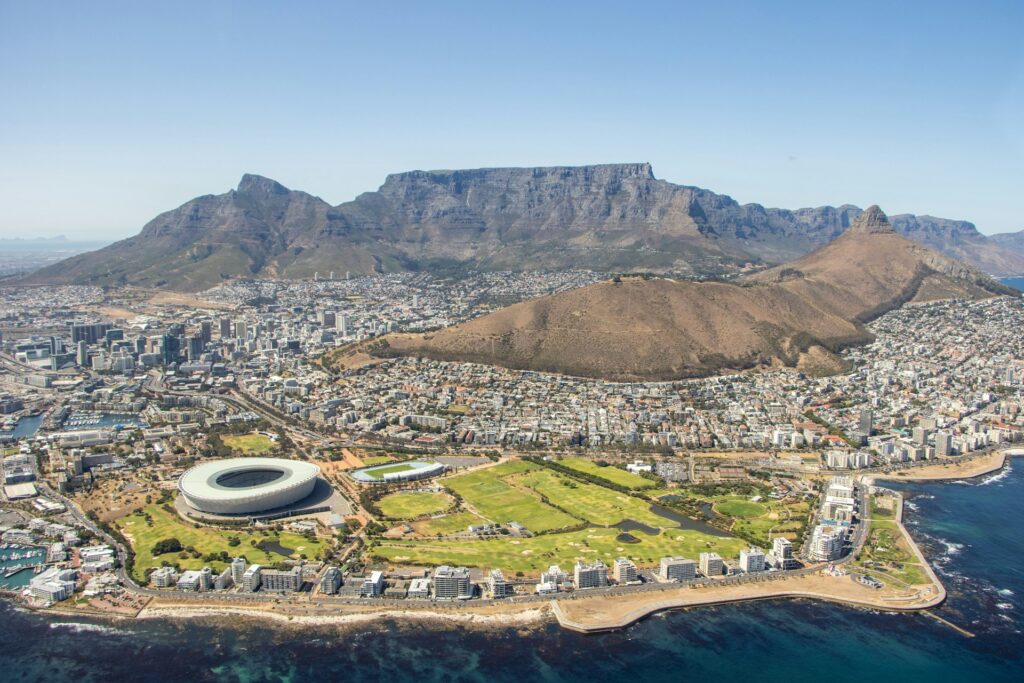
Three or four nights gives you time to explore the obvious highlights without spending the whole stay moving between them. Table Mountain, the V&A Waterfront, the Cape Peninsula and the city’s beaches can fill several days, but the city is also a good place to recover from the flight before collecting a hire car and heading further east. Leave some mornings without a fixed plan.
This is also where you can introduce golf without making it the centre of the trip. Steenberg is within easy reach of the city and gives golfers a proper round in a very different setting. Those not playing have a full day of options: exploring the surrounding area, visiting Constantia’s wine estates or making the most of Cape Town’s food scene. The split tends to work well.
Make Time for the Winelands
From Cape Town, the Winelands are an easy addition rather than a detour. Stellenbosch, Paarl and Franschhoek offer wine estates, excellent restaurants and mountain scenery, and two nights here sits comfortably between Cape Town and the Garden Route.
The region also makes it easy to build an itinerary around different interests. Golfers can play a round at Pearl Valley while everyone else spends the day wine tasting, visiting galleries or sitting down for a long lunch. South Africa rewards a slower pace, and the Winelands are one of the better places to find it.
Follow the Garden Route
The Garden Route is where the trip starts to feel like a proper road trip.
The route follows the southern coast through forests, beaches, lagoons and small towns, with George, Knysna and Plettenberg Bay providing the natural stops. For golfers, Fancourt near George is the obvious anchor: three courses on the estate, including The Links, and enough facilities to justify staying for two nights rather than just driving up for a round. Around Knysna, Simola and Pezula offer two very different golfing experiences, while the wider area has hiking, beaches, kayaking and wildlife encounters for those not playing.
Take your time between stops. Pull over when a viewpoint catches your eye. Leave some afternoons unplanned. The Garden Route is as much about the spaces between destinations as the destinations themselves.
Then Change Pace Completely
After the coast and the Winelands, heading north for a safari creates a genuinely useful contrast.
The Kruger region operates differently from anywhere else on the route. Days tend to revolve around early morning and late afternoon game drives, with the middle hours for eating and resting at the lodge. A South Africa safari holiday has its own rhythm, and it tends to be the part of the trip that guests find hardest to leave behind.
For golfers, Leopard Creek near Kruger provides an unusual final round. The course sits on the park boundary and wildlife can become part of the experience mid-round. Premier Golf’s South Africa itineraries bring golf and safari holidays together rather than treating them as separate trips, which makes practical sense when you are trying to fit two very different experiences into a two-week holiday.
How Long Do You Need?
Two weeks is a sensible starting point if you want to take in Cape Town, the Winelands, the Garden Route and a safari without turning every day into a transfer.
A workable structure could look something like this:
Days 1 to 4: Cape Town
Days 5 to 6: Cape Winelands
Days 7 to 10: Garden Route
Days 11 to 14: Safari
Golfers can add rounds in Cape Town, the Winelands and along the Garden Route, then finish with Leopard Creek if the itinerary and budget allow. Non-golfers have plenty of alternatives at each stage, from sightseeing and wine tasting to hiking, beaches and game drives.
Extending the trip adds breathing room rather than simply more destinations. An extra night in Cape Town, more time around Knysna or a longer safari stay each changes the pace of the trip rather than just adding another checkbox.
Think About the Timing
The best time to visit depends on what you want most from the trip.
South Africa’s seasons are reversed from those in the UK, which makes it a good option for a winter escape. The Western Cape is warmest and driest from October to March. Safari conditions are often better in the drier months between May and September, when thinner vegetation and animals gathering around water sources make game viewing more reliable.
Golf, coastal sightseeing, wine tasting and wildlife do not share identical seasonal sweet spots, so it is worth thinking about the order of priorities before settling on travel dates. A trip in September or October picks up the tail end of good safari conditions as the Cape warms up. April and May work well in the opposite direction.
Leave Some Space in the Itinerary
The temptation on a first trip to South Africa is to keep adding things.
Cape Town needs another day. There is another wine estate worth visiting. Someone mentions a different course. Then you discover the Garden Route and decide that two nights cannot possibly be enough. Before long, the holiday becomes a sequence of early check-outs and rushed breakfasts.
Try to resist. South Africa works better when the itinerary has a few fixed points and plenty of space around them. Book the golf rounds that really matter. Choose your safari lodge. Decide where you want to stay. Then leave some afternoons open for whatever turns up.
A Holiday That Works Beyond the Fairways
The best thing about combining golf with a South Africa safari holiday is that the two do not need to be kept apart. A morning round can be followed by a vineyard lunch. A day on the Garden Route can end with dinner overlooking the coast. A few days later, you trade the golf buggy for a safari vehicle and spend the evening watching elephants at a waterhole.
Golf can be one of the reasons you go to South Africa without dictating the whole trip. Build the route around the places you want to experience, leave enough time to enjoy them properly, and the golf fits naturally into the journey.
You may come home remembering a particular course. Just as likely, you will remember the road between two of them.